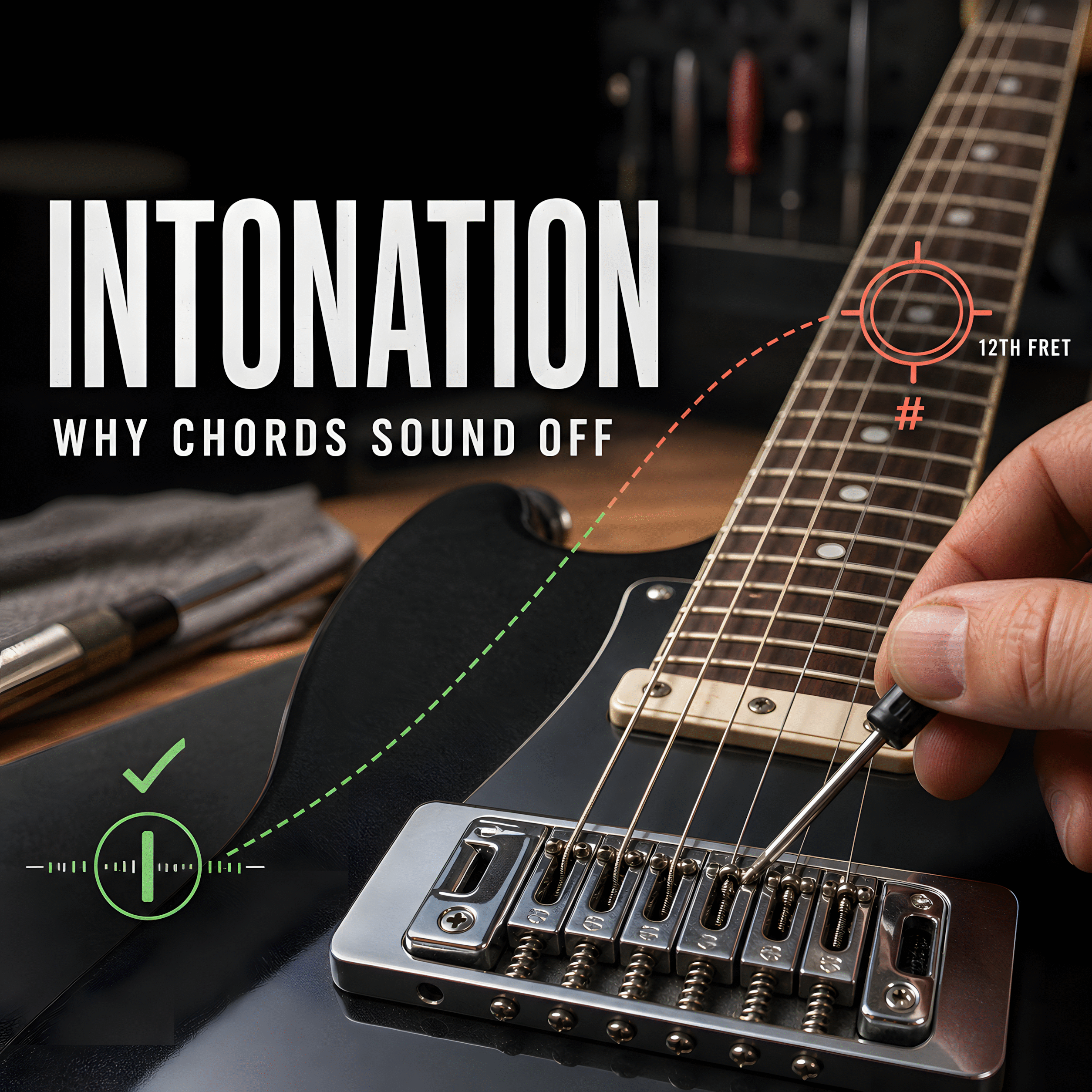
Guitar intonation is whether your guitar plays in tune along the whole neck, not just on the open strings. When intonation is off, your tuner says every open string is perfect — and your barre chord at the 7th fret still sounds sour. The fix is usually a few millimeters of saddle travel, and you can diagnose the whole thing in about a minute with a chromatic tuner that shows cents.
This guide covers the 12th-fret check, exactly which way to move each saddle, per-bridge instructions, and the traps (old strings, high action, heavy fingers) that make guitars look badly intonated when they aren't.
You'll need a tuner with a cents readout: open the free chromatic tuner — it works from your mic, no download.
What is guitar intonation?
Intonation is the match between your guitar's actual fretted pitches and the pitches the frets are supposed to produce. Fret positions are calculated for an exact vibrating string length. If the real length of a string — nut to saddle — is slightly wrong for that string's thickness and height, every fretted note lands slightly sharp or flat, and the error grows as you move up the neck.
That's why intonation problems have such a specific signature:
- Open strings tune perfectly.
- Low-position chords sound acceptable.
- Chords and single notes above the 5th fret drift increasingly out of tune.
- Recording layered guitar parts makes everything sound subtly "chorused" and wrong.
Intonation is set per string, at the bridge, by moving each saddle forward or backward. It is normal maintenance — not a defect — and any change to string gauge, action, or tuning can shift it.
How do I know if my guitar is intonated?
The 60-second check, one string at a time:
- Put on reasonably fresh strings and tune the open string dead center on the chromatic tuner.
- Fret the same string at the 12th fret using your normal playing pressure, and pluck with a medium attack.
- Read the tuner. The 12th fret is exactly one octave up — the note name should match and the cents needle should sit near zero.
Three possible results:
- Same note, ±2 cents or so: that string is intonated. Move on.
- 12th fret reads sharp: the string's speaking length is too short. The saddle needs to move back.
- 12th fret reads flat: the speaking length is too long. The saddle needs to move forward.
You can also compare the 12th-fret harmonic (touch lightly over the fret wire, pluck, lift) against the fretted note. The harmonic is always a pure octave regardless of setup, so it's a great reference — but the open-string comparison works just as well and is easier for beginners to read on a tuner.
One habit from the bench: do this check with the guitar in playing position, not lying flat on a table. Neck flex under gravity is small, but on a strobe-level readout you can watch it move a cent or two — and you play the guitar upright, not on its back.
Guitar intonation and cents: how far off is too far?
A cent is 1/100 of a semitone (the full math, if you're curious). Humans start hearing pitch differences at roughly 3–5 cents in direct comparison, and layered or distorted guitar parts expose even less.
Practical targets:
| 12th-fret error | Verdict |
|---|---|
| within ±1–2 cents | properly intonated — stop here |
| 3–5 cents | audible in chords and recordings; worth adjusting |
| 5–10 cents | clearly sour up the neck |
| 10+ cents | something else is wrong too — check strings, action, and nut |
This is exactly why "my clip-on says it's fine but it sounds off" happens: a tuner that only shows a green light at ±3 cents can pass a string that's audibly out at the 12th fret. Use a display that shows the actual cents number for intonation work, and read how tuner accuracy and Hz relate if you want the deeper story.
How do you do intonation on a guitar? (step by step)
For any electric with adjustable saddles:
- Restring first if your strings are old. Worn strings have uneven mass and will not intonate — this is the #1 wasted-effort trap. Nine times out of ten, when a guitar comes to my bench "impossible to intonate," the strings are six months old.
- Tune every string to pitch, then check the 12th fret on the low E as above.
- If it's off, adjust that saddle a quarter turn of the screw at a time: sharp → saddle back, flat → saddle forward.
- Retune the open string after every adjustment — moving the saddle changes tension, so the old reading is meaningless until you retune.
- Re-check the 12th fret. Repeat quarter-turn → retune → re-check until it centers.
- Do the same for the remaining five strings.
- Final pass: strum an E-shape barre at the 7th fret and a D chord at the 10th. Your ears are the final judge.
Moving a saddle back against string tension is stiff work for the screw — slacken the string a little first, adjust, then tune back up. It protects the screw head and the saddle threads.
Phillip McKnight's 3-step intonation walkthrough — good visual of the saddle screws if you've never touched them.
Which way do I move my saddle for intonation?
The rule, worth memorizing as "flat forward, sharp back":
- Fretted note sharp → string is too short → move the saddle back, away from the neck.
- Fretted note flat → string is too long → move the saddle forward, toward the neck.

If direction ever confuses you mid-adjustment, think of it physically: lengthening the string flattens every fretted note, shortening it sharpens them. You're adding or removing length to cancel the error the tuner showed you.
Guitar intonation adjustment by bridge type
| Bridge | Adjuster | Notes |
|---|---|---|
| Strat-style / hardtail | Phillips screw at the rear of each saddle | the easiest to work on; turn clockwise to pull the saddle back |
| Vintage Tele (3 saddles) | screws at the bridge rear, two strings per saddle | you're intonating pairs — split the difference, or fit compensated saddles for a real fix |
| Tune-o-matic (Gibson-style) | flathead/Phillips screw per saddle, facing the neck or tailpiece | limited travel; sometimes a saddle must be flipped to buy more range |
| Floyd Rose / locking trem | hex screw clamping each saddle block | slacken the string fully, loosen the clamp, nudge the saddle, re-clamp, retune — tedious but precise |
| Wraparound (one-piece) | usually only two grub screws for the whole bridge | true per-string intonation needs a compensated replacement bridge |
Two-point floating tremolos add one more wrinkle: every saddle move shifts the bridge's balance slightly, so expect an extra retune pass at the end.
How to adjust intonation on an acoustic guitar
Acoustics have a one-piece bone or plastic saddle sitting in the bridge — nothing to screw. What you can still do yourself:
- Fresh strings and correct gauge. A gauge change alters intonation on acoustics too, and old strings are just as misleading here.
- Check action and humidity. A dry guitar with a sinking top or a swollen, over-humidified one moves its own intonation. Stable 45–55% humidity keeps the geometry where the builder set it.
- Measure the error anyway. Run the same 12th-fret check per string and write down the cents. That list tells a luthier exactly what's needed.
The actual fix — reshaping or replacing the saddle with a compensated one (that's why good acoustic saddles have that zigzag top edge, giving each string its own contact point) — is thin-tolerance work with a real risk of ruining a blank. This one is worth handing to a tech, and it's inexpensive as setup jobs go.
Guitar intonation sharp at the 12th fret? Troubleshooting first
Before you move any saddles, rule out the impostors. Most "intonation problems" I see are one of these:
| Symptom | Likely cause | Fix |
|---|---|---|
| every string slightly sharp fretted | action too high | lower the action, then re-check — high strings stretch sharp as you press |
| sharp only when you grip hard | fretting pressure | fret just behind the wire with minimum pressure; big frets amplify this |
| sharp in the first few frets only | nut slots too high | a tech cuts the slots down; saddles can't fix a nut problem |
| readings wander pluck to pluck | dead strings | restring, stretch, then measure |
| one string won't intonate even at full saddle travel | wrong string (or a twist in it), or extreme relief | reseat/replace the string; check neck relief |
| everything moved after changing tunings | tension change | normal — re-check after settling into D standard or other downtunings |
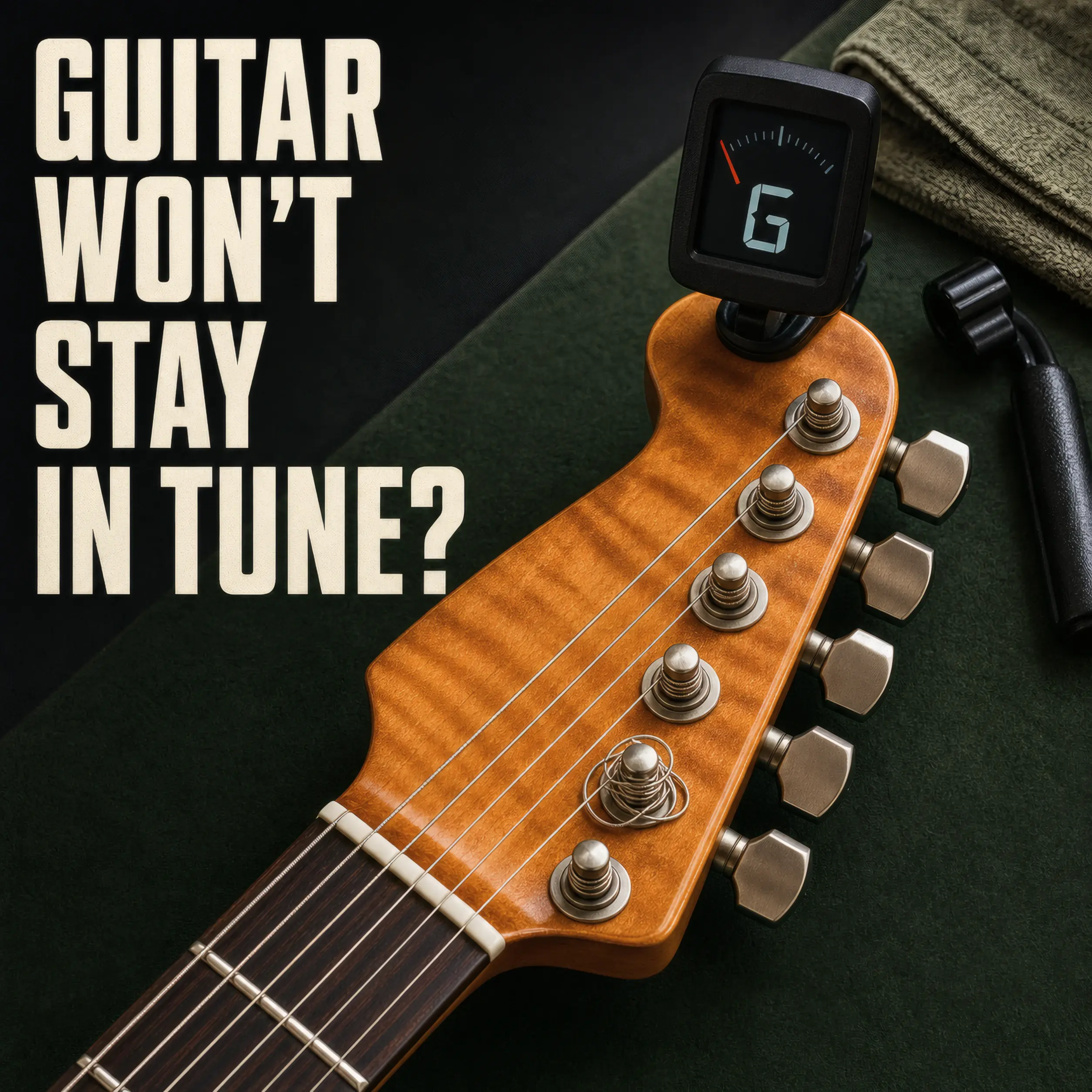
If your problem is pitch drifting during playing rather than fixed sourness up the neck, that's stability, not intonation — work through why your guitar won't stay in tune instead.
How often should you intonate a guitar?
Intonation isn't a weekly chore. Check it when something that affects string geometry changes:
- String gauge changes — the big one; a 9→10 swap will move it.
- Seasonally — twice a year as humidity swings the neck.
- After any setup work — truss rod or action adjustments shift it.
- After switching your main tuning — going to drop D or D standard permanently deserves a re-check; how often you should tune is a different, much more frequent question.
Same strings, same tuning, same climate? Your intonation can sit untouched for a year.
Guitar intonation tools: what you actually need
The honest list is short:
- A tuner with a cents display — the free online tuner works; a mic in a quiet room is plenty accurate for ±1–2 cents.
- The right screwdriver or hex key for your saddles (Phillips #1/#2 for most Fender-style, small flathead for tune-o-matic, 2.5–3 mm hex for locking trems).
- Optional: a capo to hold a fretted note while your hands are busy, and a string winder for the acoustic-saddle scenario.
You do not need a strobe tuner, a workstation, or a neck rest to check and set intonation on an electric. Save the specialty tools for the day you enjoy setup work enough to want them.
FAQ: guitar intonation
Why do open strings tune fine but chords sound wrong?
Open strings only test one length of string. Every fretted note depends on the saddle-set speaking length being exactly right — if it isn't, fretted notes go progressively sharp or flat while open strings stay perfect. That mismatch is the definition of an intonation problem.
How do I check guitar intonation without tools?
Play the 12th-fret harmonic, then the 12th-fret fretted note, and listen. If the fretted note sits noticeably higher or lower than the harmonic, intonation is out. A tuner just quantifies what your ear already caught.
Can intonation be perfect on every fret?
No — frets are a mathematical compromise (equal temperament) and pressing a string always stretches it slightly. Well-set intonation gets every fret close enough that nobody can hear the error, which is within a cent or two at the 12th fret.
Does intonation matter if I only play open chords?
Less, but it never disappears. A capo instantly turns open shapes into fretted notes, and even open chords contain fretted notes. If you record, bad intonation shows up as a subtle out-of-focus quality when parts stack.
Why is my guitar intonation sharp on every string?
Uniform sharpness usually isn't six coincidentally short strings — it's high action, a high nut, or heavy fretting pressure pulling everything sharp. Fix those first, then re-measure; you may find the saddles were fine all along.
Run the check tonight
Ten minutes, one guitar, six strings:
- Open the chromatic tuner and run the 12th-fret check on each string
- Write down the cents per string — adjust, or hand the list to your tech
- Downtuned player? Re-check after settling into drop D or D standard
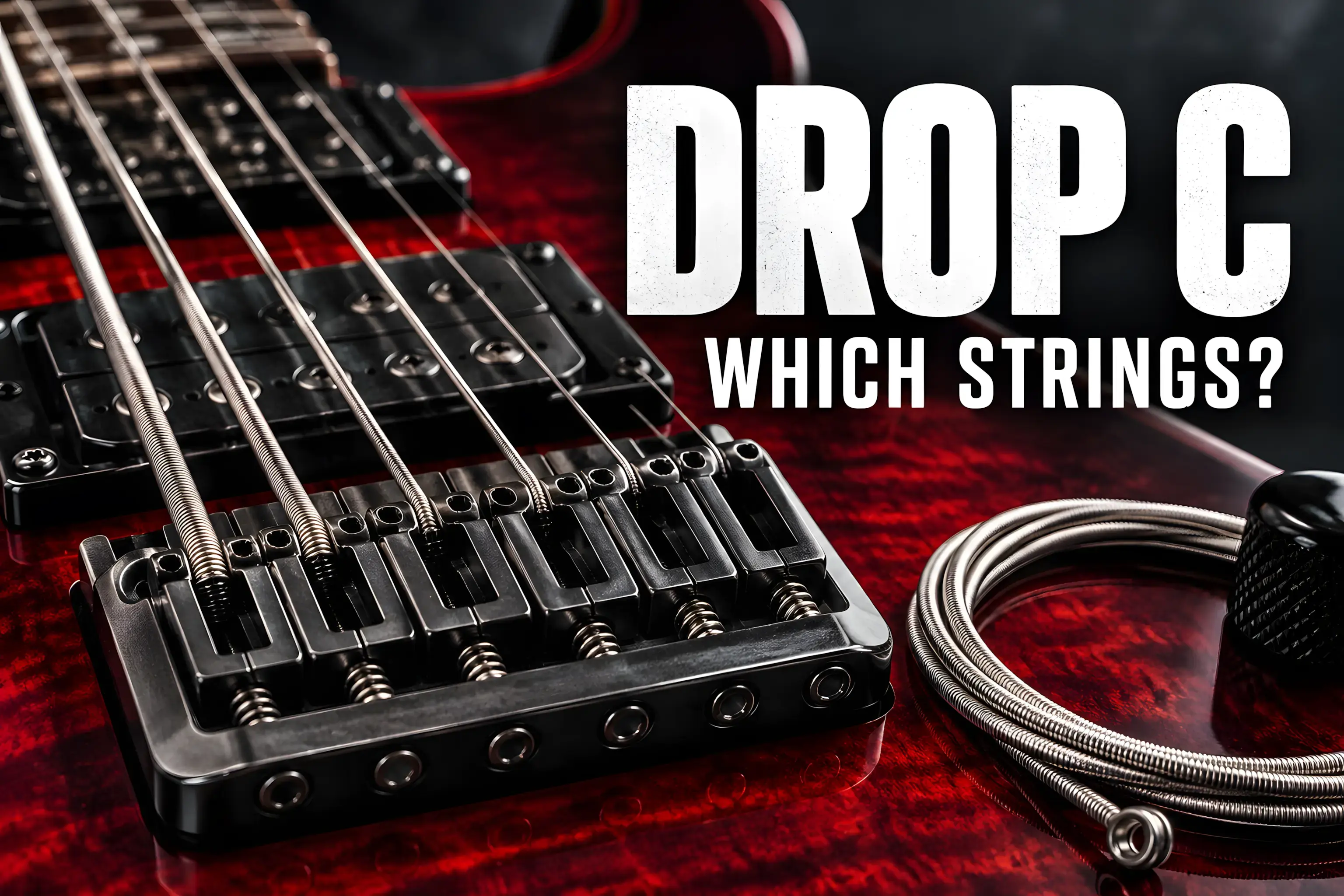
- For Drop C, compare string gauges by scale length before adjusting the saddles for a new set.