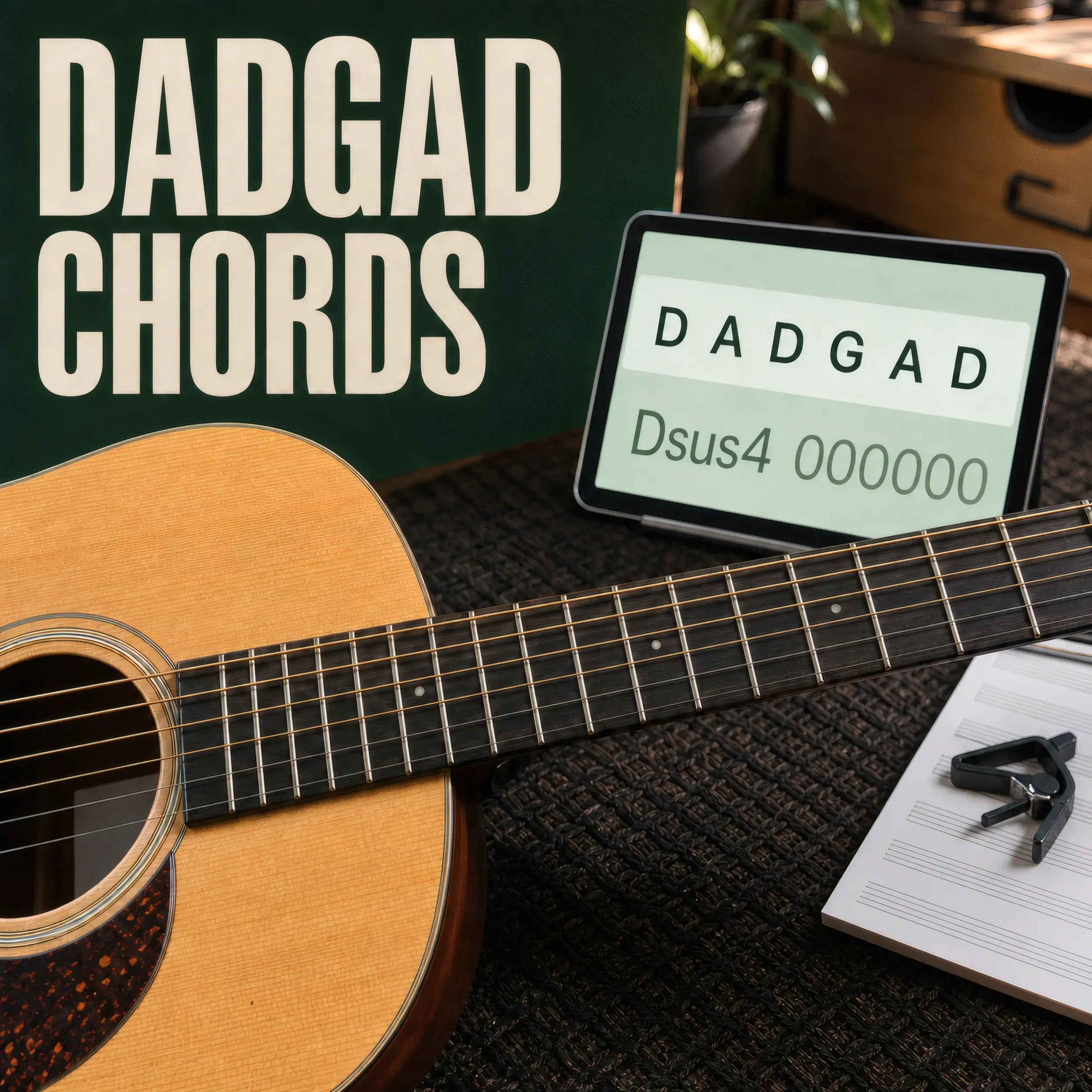
Strum all six strings of a guitar in DADGAD without fretting anything and you've already played the tuning's most famous chord. It's a Dsus4, wide and unresolved, the sound under half the Celtic records ever made. Every shape on this page is a small variation on that ringing home base.
Fret numbers below run low string to high (6th to 1st), and every shape was checked note by note against the tuning D2 A2 D3 G3 A3 D4. Not in DADGAD yet? Tune there first, it takes a minute:
- Open the DADGAD tuner preset — three strings drop a whole step, three don't move
- Browse shapes in the chord library once your strings are down
The DADGAD chord chart
Twelve shapes cover most of what the tuning gets used for. The honest names matter — DADGAD loves suspensions and added notes, and pretending 020000 is a plain G helps nobody when it clashes with a recording.

| Chord | Frets (low → high) | What you're hearing |
|---|---|---|
| Dsus4 | 0 0 0 0 0 0 | the open-strum home sound |
| D5 (modal D) | 0 0 0 2 0 0 | D with no third, pure drone |
| D major | 0 0 4 2 0 0 | the F# turns the drone major |
| G (add9) | 5 2 0 0 0 0 | full G, bright open top |
| G/D | 0 2 0 0 0 0 | one-finger G over a D bass |
| A7sus4 | 0 0 2 0 0 0 | the "lift" chord before D |
| Asus4 | x 0 2 2 0 0 | tighter A, skip the low string |
| Cadd9 over D | 0 3 2 0 0 0 | folky C color, drones intact |
| Em (add9) | 2 2 2 0 0 2 | the saddest easy shape here |
| Bm | x 2 4 4 2 0 | real minor chord, takes practice |
| Esus4 (barre) | 2 2 2 2 2 2 | one finger flat across fret 2 |
| Asus4 (barre) | 7 7 7 7 7 7 | same trick at fret 7 |
Print-worthy, and the SVG above is exactly that if you want it on the music stand.
One-finger DADGAD chords first
Three shapes, one finger each, and they already make a song.
D5 — 000200. First finger on the 3rd string, 2nd fret. The G becomes an A and everything left ringing is a D or an A. This no-third D chord is the tuning's workhorse. It's neither major nor minor, which is exactly why it fits over so much.
G/D — 020000. First finger on the 5th string, 2nd fret, turning the A into a B. Now the open strings spell out G major over a low D.
A7sus4 — 002000. First finger on the 4th string, 2nd fret. Strum from the 5th string down and you get a chord that leans hard toward home. Play it, then lift your finger to open strings, and you've heard the oldest move in the DADGAD playbook.
I teach these three to every student the day they discover the tuning. Someone who has played guitar for two weeks can sound good in DADGAD by dinner, and that early win buys months of motivation.
The full major and minor shapes
D major — 004200. Adds F# on the 4th string, 4th fret (ring finger), plus the A at the 3rd string, 2nd fret. The moment the F# lands, all that suspended ambiguity resolves. Save it for when the song has earned it.
G with the low root — 520000. Pinky or ring on the 6th string, 5th fret gives you a G in the bass; index at the 5th string, 2nd fret adds the B. Big, complete, and the open first string floats a ninth on top.
Cadd9 over D — 032000. If the low open D muddies it, skip the 6th string. In a D-to-C-to-G run this shape sounds like every campfire folk record at once.
Em (add9) — 222002. Lay your index across the bottom three strings at the 2nd fret, pinky grabs the 1st string, 2nd fret. The two open middle strings turn a plain E minor into something misty. Cheapest melancholy on the instrument, at least until you learn Bm.
Bm — x24420. Skip the 6th string. Index on the 5th string at 2, ring and pinky on the 4th and 3rd at 4, middle on the 2nd at 2, first string open. The stretch is real. It arrives after a week or so of complaining.
Asus4 — x02200. Two fingers, skip the low D, and you have a cleaner A-family chord than the one-finger version when the bass note matters.
The movable barre trick
Bar one finger straight across all six strings at any fret. That's it, that's the trick. The intervals of DADGAD mean a flat barre is always a sus4 chord named after your lowest note — 2nd fret is Esus4, 5th is Gsus4, 7th is Asus4.
Slide between them while the strings ring and you get the shimmering, parallel-motion sound that fingerstyle players build entire pieces from. Add a pinky two frets up on the 4th string to resolve any barre to a major-flavored voicing, and suddenly you're arranging.
A capo does the same job in reverse, moving the whole open tuning up. Capo at the 2nd fret and everything on this page comes out a step higher (close your eyes and it's nearly a bouzouki, which is half of why Irish accompanists love the tuning capoed).
Three progressions that teach the tuning
Slow strums, let everything ring, metronome at 70 if you're practicing changes.
- Dsus4 → G/D → A7sus4 → Dsus4 (000000 → 020000 → 002000 → 000000). All one-finger. The drone never stops.
- D → Cadd9 → G → D (004200 → 032000 → 520000 → 004200). The folk classic. That C-to-G change is the hardest thing in this article's first half, and it's not very hard.
- Em(add9) → G → Dsus4 → A7sus4 (222002 → 520000 → 000000 → 002000). Minor start, open-armed finish.
Record yourself playing progression 1 for two minutes and improvise single notes over the top on the first string. This is my favorite homework to assign because nobody ever comes back saying it went badly.
Hearing the shapes strummed and arpeggiated does more than any diagram — this walkthrough covers the core chords and the strumming feel that suits them.
DADGAD songs worth learning the chords for
The tuning has a short, traceable history. Folk guitarist Davy Graham worked it out around 1962, chasing the drone of the oud music he'd heard traveling in Morocco, and his DADGAD arrangement of the Irish air "She Moved Through the Fair" set the template everyone since has borrowed.
What to put on while you practice:
- Kashmir — Led Zeppelin. The riff is DADGAD played as rhythm, all barre-and-slide. Jimmy Page picked the tuning up from the British folk scene and also used it on the instrumental Black Mountain Side.
- Photograph — Ed Sheeran, reportedly written and played in DADGAD. Proof the tuning isn't stuck in the 1960s.
- Anything by Pierre Bensusan, who has played essentially his whole career in DADGAD. Start with Wu Wei. Humbling and encouraging at the same time, somehow.
- Irish reels and airs backed by guitarists like Tony McManus and John Renbourn — the accompaniment style progressions 1 and 2 above are sketching.
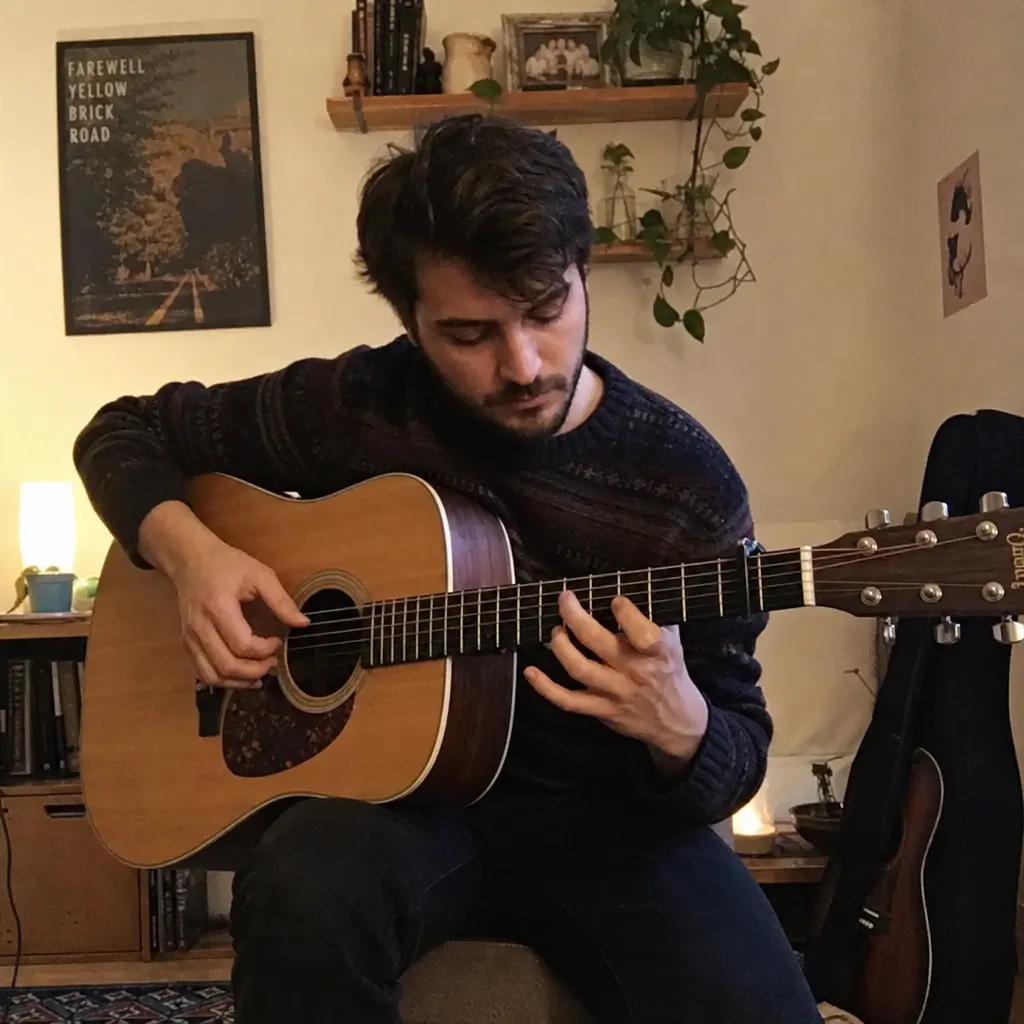
My own most-played DADGAD piece is an arrangement of an old air I put together for a family gathering years ago, capo 2, mostly progression 1 with a melody threaded on top. Took an afternoon to write and people still request it. The the tuning does most of the work, which is its whole secret.
Tuning into DADGAD (the one-minute version)
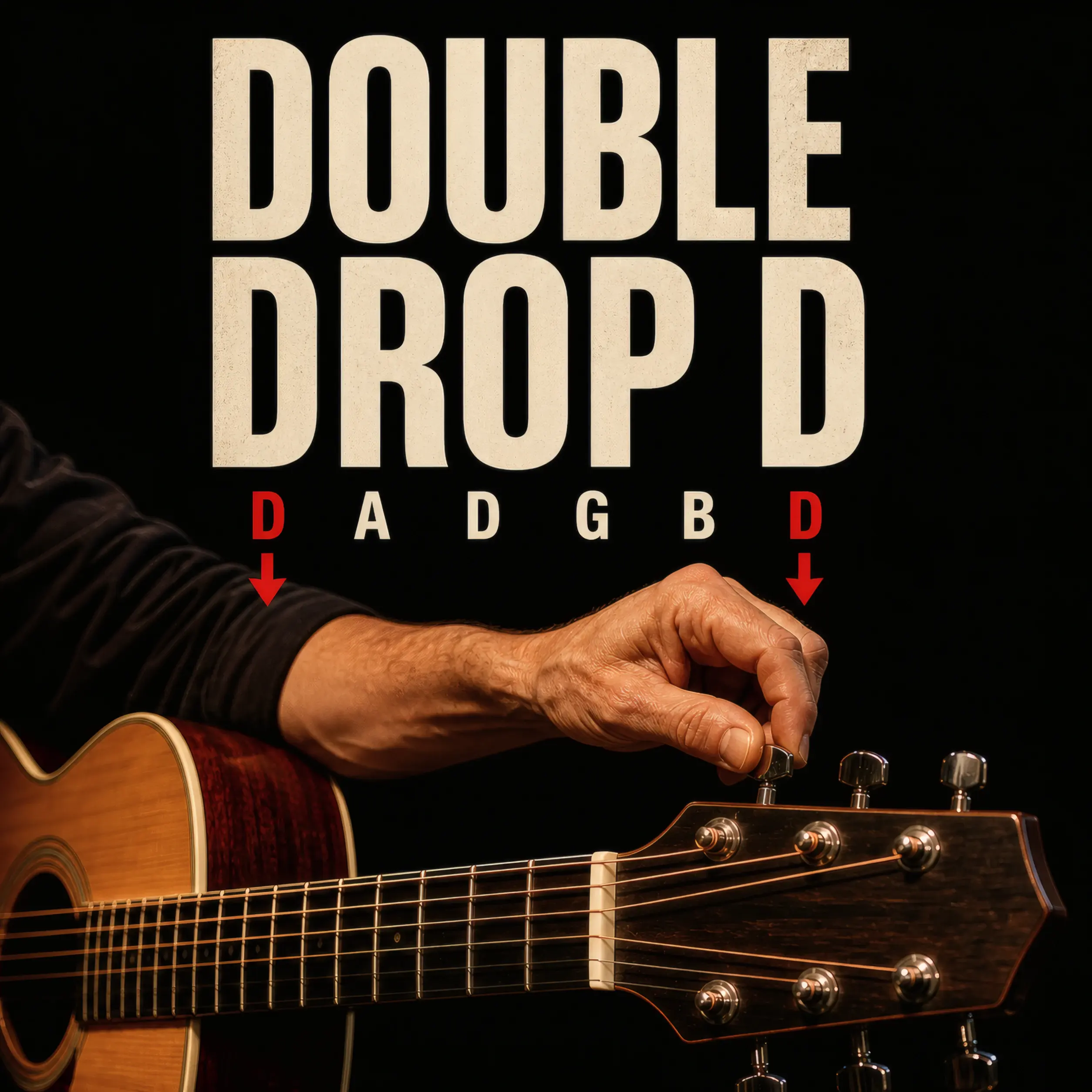
From standard, three strings drop a whole step and three stay put. Low E down to D, B down to A, high E down to D, with the A, D, and G strings untouched. Down-tunings are gentle on a guitar, so there's nothing to worry about on that front.
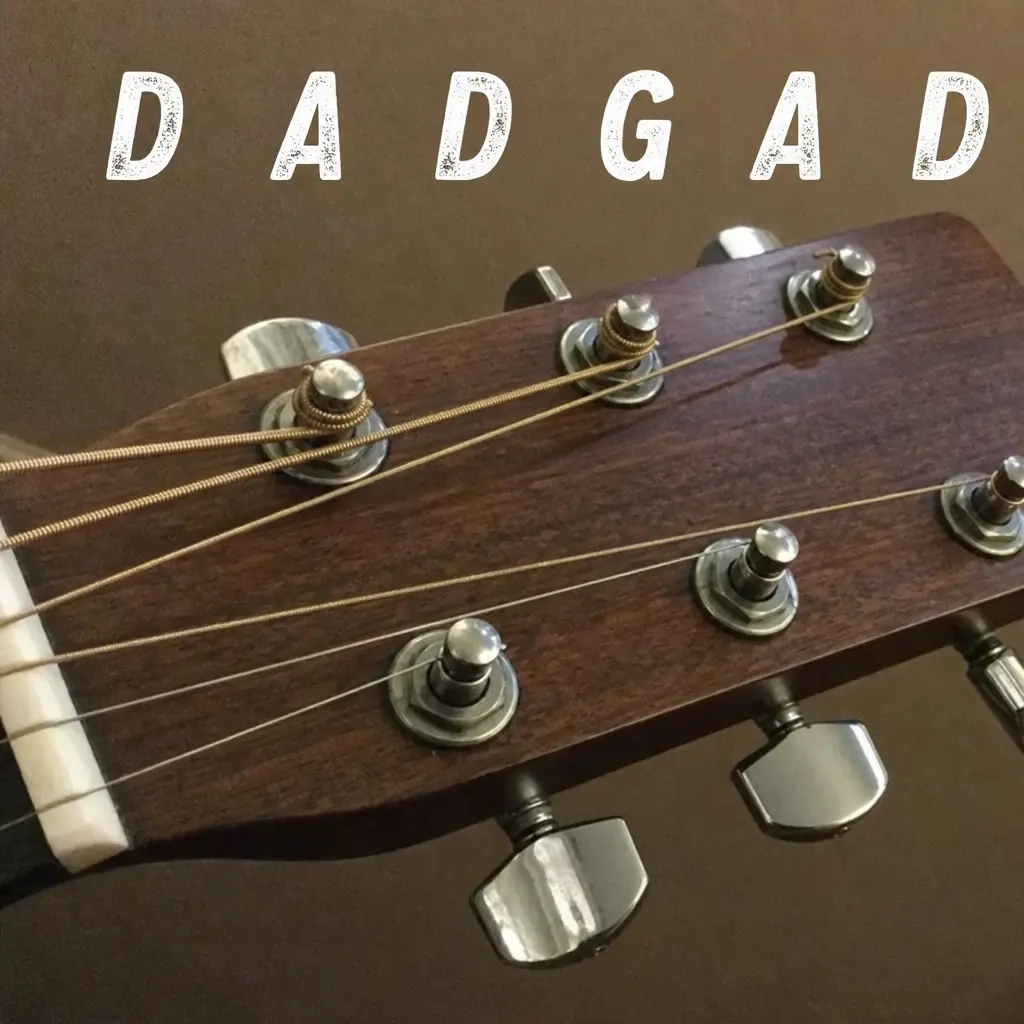
The DADGAD tuner preset listens through your mic and shows each string's target, which beats counting semitones in your head. Check the 6th and 4th strings against each other when you're done, they're an octave apart and should ring clean together.
If open tunings hook you after this, open G and open D are the natural next stops, and the alternate tunings overview maps the whole territory.
FAQ: DADGAD chords
What chord do the open strings make in DADGAD?
Dsus4. The open strings are D, A, D, G, A, D — a D chord with the third replaced by a suspended fourth (the G). That missing third is why the tuning sounds unresolved and floating, and why both major and minor melodies work over the open strings.
Are DADGAD chords easier than standard tuning chords?
The beginner shapes, dramatically so. D5, G/D, and A7sus4 each need one finger, versus three for their standard-tuning cousins. Full chords with proper thirds, like Bm at x24420, take about the same effort as standard. The tuning shifts difficulty rather than deleting it, easy things get easier and precise things stay precise.
Can I use my normal chord shapes in DADGAD?
Mostly no, and trying is the fastest way to sound out of tune. Three strings changed pitch, so an old shape lands on new notes. The exception is anything played only on the 5th, 4th, and 3rd strings, those didn't move. Learn the shapes above instead, there are fewer of them than you needed in standard.
Why is DADGAD called Celtic tuning?
Because Irish and Scottish accompanists adopted it so completely that the association stuck. The droning open strings mimic the constant-pitch drones of pipes, and modal shapes like D5 fit tunes that aren't strictly major or minor. The name is informal — the tuning is a 1962 invention that folk players of every stripe use.
Do I need a capo for DADGAD?
Need, no. Want, probably. Sets of DADGAD shapes only exist in D-flavored keys, so a capo is how you reach E, F, or G without retuning. Capo 2 is the most common spot in Irish sessions. Any decent capo works, though heavy trigger capos pull the light strings slightly sharp, worth a quick retune after clamping.
What should I learn first, chords or fingerpicking?
Chords, for a week. Progression 1 above builds the muscle memory for where the sweet notes live, and fingerpicking in DADGAD is mostly arpeggiating those same shapes with the thumb landing on the drones. Players who start with the chords pick up the fingerstyle side noticeably faster.
Put the shapes under your fingers
Tune to DADGAD, play the open strum, then walk progression 1 slowly until the changes stop requiring thought. The chord library has these shapes and more filed under DADGAD whenever you need a reminder mid-practice.