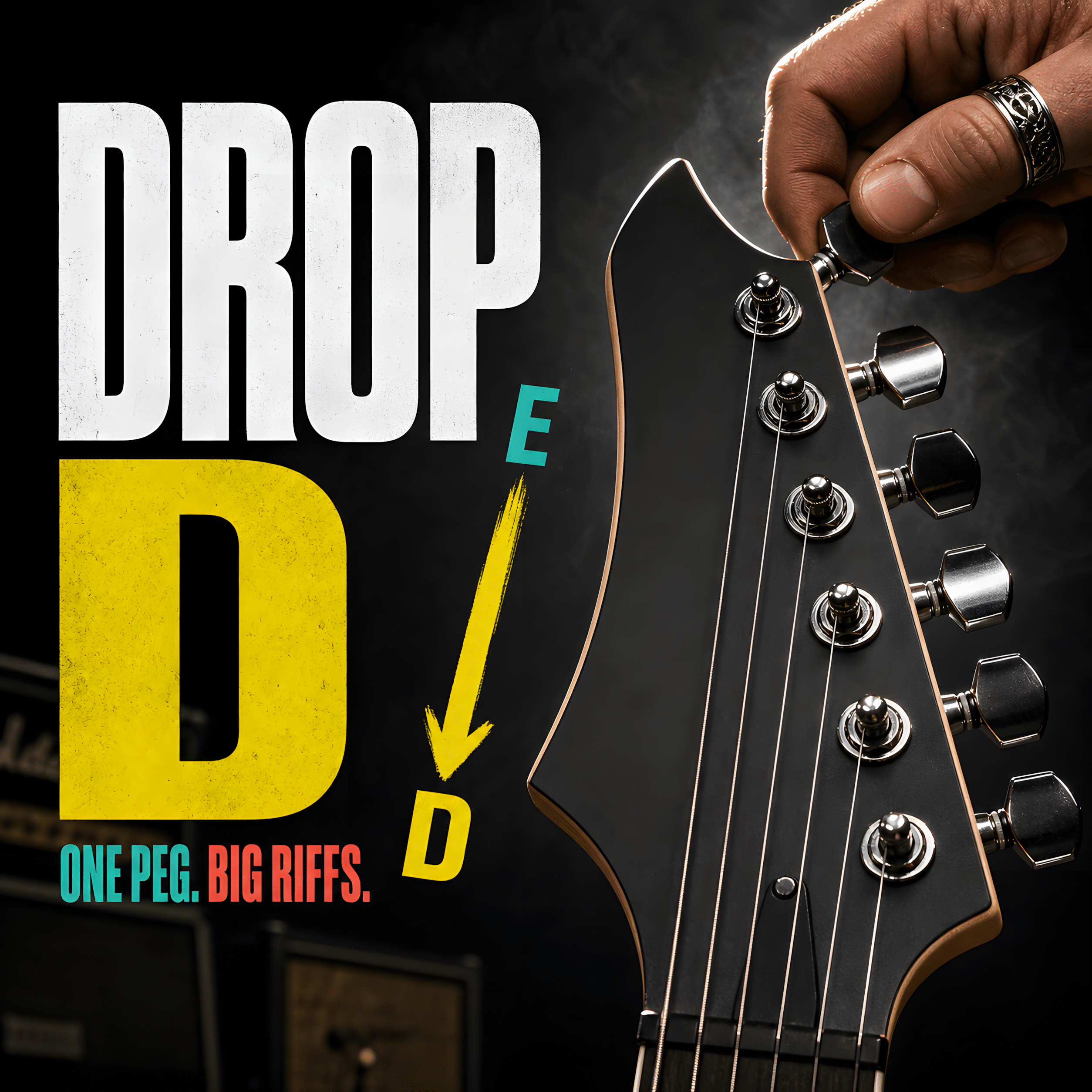
Drop D is the "easy mode" heavy tuning. Drop C goes further and can feel huge, but it asks more from your strings and setup.
This guide compares Drop C vs Drop D in plain terms, then shows you how to tune both with the right presets so you do not waste rehearsal time chasing the wrong note.
Quick CTA:
Drop D vs Drop C in one minute
Drop D (D A D G B E)
Drop D changes one string from standard. You lower the 6th string:
- E -> D
Everything else stays the same.
Drop D is great if you want:
- one-finger power chords on the lowest strings
- heavier riffs without relearning the whole neck
- a tuning you can switch in and out of fast
Drop C (C G C F A D)
Drop C is lower. Most players get there in two steps:
- Tune the whole guitar down a whole step to D G C F A D (D standard)
- Then drop the lowest string from D to C
That gives:
C - G - C - F - A - D
Drop C is great if you want:
- a heavier pitch range for metal and hard rock
- riffs that sit under vocals without crowding them
- a tight, low chug sound (with the right strings)
How to tune to Drop D (fast and safe)
Open the preset:
If you are in standard tuning (E A D G B E), you only change one string.
Step by step
- Play the 6th string open.
- Loosen until the tuner reads D and centers.
- Recheck the other strings quickly:
- A, D, G, B, E
If you want the full walkthrough with chords and riff ideas:
How to tune to Drop C without getting lost
Open the preset:
Drop C is not "Drop D, but lower." The middle strings change too. Use the preset so you always have the target notes in front of you.
Step 1: Tune down to D standard (D G C F A D)
Start from standard and tune each string down a whole step:
- 6th: E -> D
- 5th: A -> G
- 4th: D -> C
- 3rd: G -> F
- 2nd: B -> A
- 1st: E -> D
Step 2: Drop the low string from D to C
Now only the lowest string changes:
- Play the 6th string.
- Loosen until the tuner reads C.
Step 3: Recheck every string once
Drop tunings move overall tension a lot. Do a second pass:
C - G - C - F - A - D
Which tuning should you choose?
Pick based on the problem you are solving.
Choose Drop D if you want:
- a quick switch for a song or two in a set
- standard-ish chord and scale shapes on strings 5 to 1
- less setup drama on most guitars
Choose Drop C if you want:
- lower pitch range without using a 7-string
- riffs that sit below standard-tuned guitars
- a heavier sound that still feels playable (with the right string tension)
If you like the idea of Drop C but want less looseness, Drop C# is a good middle ground:
The setup reality: Drop C needs more string tension
Drop D often works on a normal string set. Drop C usually does not, especially if you pick hard.
What can go wrong in Drop C
- low string feels floppy and goes sharp when you hit it hard
- chugs sound "wobbly" because the string swings wide
- fret buzz increases because tension drops
- tuning drifts because the string does not settle
What helps
- heavier strings (common for Drop C)
- a basic setup (action and intonation)
- a tighter picking hand and more palm mute control
If your guitar struggles to stay stable in any tuning, start here:
Why your guitar won't stay in tune
Chord and riff differences (what changes under your fingers)
One-finger power chords stay easy in both
Drop tunings line up the lowest strings in a way that makes power chords easy.
In Drop D and Drop C:
- barring the lowest 3 strings at one fret gives a power chord shape
Your note names shift in Drop C
In Drop D, strings 5 to 1 are still standard. In Drop C, every string is lower. That means:
- your familiar shapes still work
- the names of the chords are different unless you transpose
If you write with shapes and feel, that may not matter. If you need exact chords for bandmates, use the chord library in the correct tuning:
Quick practice drill for tighter Drop tunings
Drop tunings can make sloppy muting obvious. Use that as a win.
- Tune to your target preset (Drop D or Drop C).
- Set the metronome to 80 BPM: Open the metronome
- Palm-mute the lowest string and play 8th notes for 60 seconds.
- Keep the tempo and switch between:
- open string
- 1st fret
- 3rd fret
Goal: each hit sounds controlled, not like a loose rubber band.
FAQs: Drop C vs Drop D
Can I tune from Drop D to Drop C by lowering one string?
No. Drop C changes more than one string. Use the Drop C preset and tune every string to the target note.
Do I need different strings for Drop C?
Many players do. If the low string feels unstable or buzzy, heavier strings usually help.
Does Drop C damage a guitar?
Tuning down does not increase tension, so it is not dangerous by itself. The main risk is playability: loose strings, more buzz, and intonation drift.
Why does my Drop C sound out of tune with itself?
Common reasons:
- old strings
- poor intonation setup
- pressing too hard and pulling notes sharp
Start with fresh strings and a careful tune. If chords still sound wrong up the neck, check intonation:
Which tuning is easier for beginners?
Drop D. It changes one string and keeps most standard shapes intact.
Next step: tune to your target and start playing
Pick one, tune it cleanly, then play for five minutes before you tweak anything. Your hands adjust fast when your tuning is stable.
If your Drop D parts sound muddy, this troubleshooting guide helps: