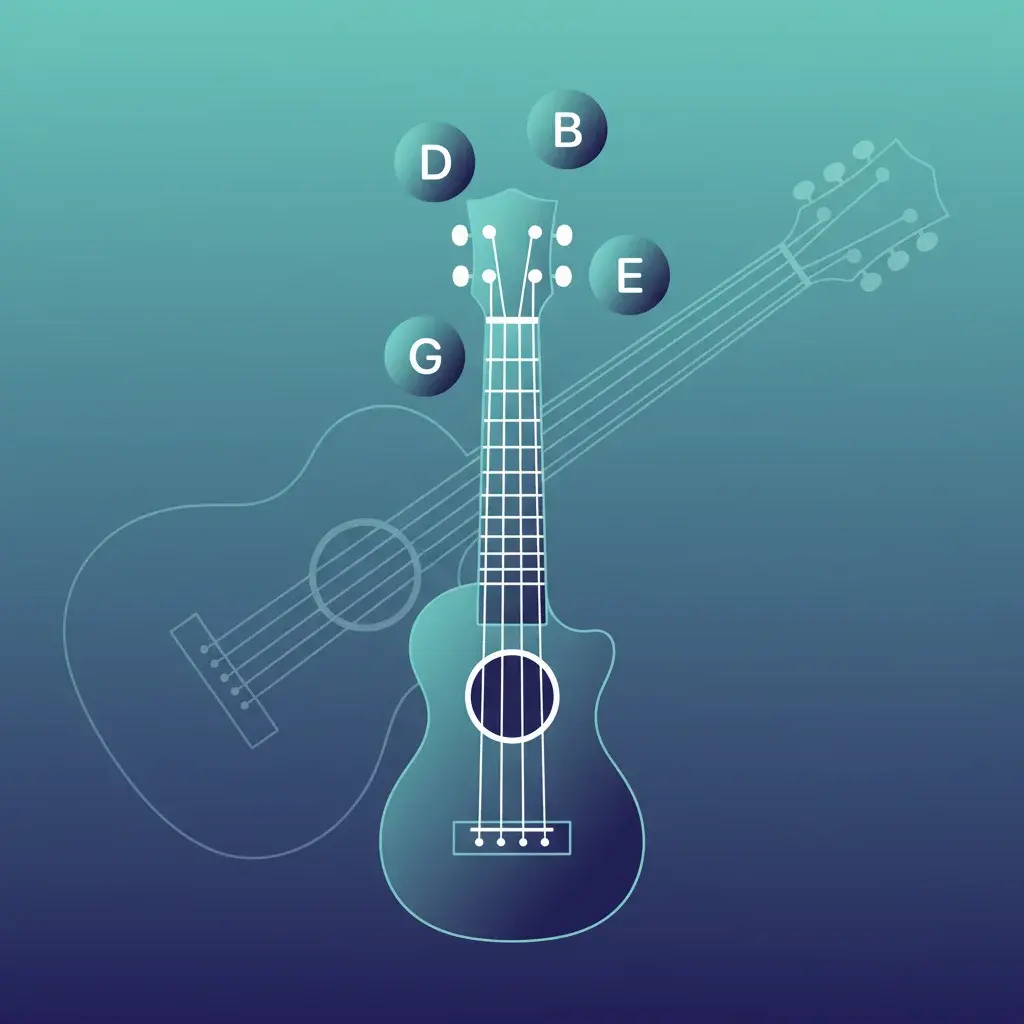
Low G tuning is one of the best upgrades you can make to a ukulele if you want it to sound bigger, play more melodies, or get into fingerpicking.
The notes stay “G C E A” — but the G string changes octave.
In this guide you’ll learn:
- what low G actually means (and why it sounds different)
- how to tune it correctly with an online tuner
- what changes (and what doesn’t) for chords and strumming
Quick CTA:
- Open the preset: Open the Low G ukulele tuner
- Standard first? Ukulele tuning guide (g C E A)
- Want chords on one screen? Open the Chord Library
What is low G tuning on ukulele?
Most ukuleles are in standard re-entrant tuning, which means the “G string” is actually the highest string in pitch.
Standard tuning (often written as g C E A) is:
G4 - C4 - E4 - A4
Low G tuning changes only that first string (the 4th string). Everything else stays the same:
G3 - C4 - E4 - A4
So the names look identical:
G - C - E - A
But the sound is different because G3 is an octave lower than G4.
Why low G sounds “bigger”
When you switch to low G, you get:
- More range: your uke has a lower bottom end, which feels closer to a small guitar.
- Fuller chords: strums have more weight because the lowest string is truly low.
- Better fingerpicking: patterns feel more “bass + melody” instead of “all bright all the time.”
- Cleaner melody lines: when you play notes on the G string, they don’t jump above everything else.
If you mostly play bright, percussive strumming, you may prefer standard re-entrant. But if you want depth and fingerstyle flexibility, low G is a great fit.
What you need before you tune (string note)
You can’t reliably tune a standard high-G string down an octave and expect it to feel good.
Low G usually uses a different string:
- often wound (metal-wrapped) for a stable low pitch
- sometimes unwound (thicker nylon) depending on preference
If you install a wound low G, the nut slot may need to be slightly wider on some ukuleles. If the string “pings” while tuning or feels stuck, that can be a sign the slot is tight.
If you’re unsure, a quick setup from a tech is inexpensive and saves frustration.
How to tune a ukulele to low G (step by step)
Use the preset so you always see the correct target notes:
1. Allow microphone access
- Tap Start listening.
- Allow microphone access when your browser prompts you.
2. Tune each string to the target note (G3 C4 E4 A4)
From the string closest to your face (the 4th string) to the string closest to the floor (the 1st string):
- 4th string: G3 (low G)
- 3rd string: C4
- 2nd string: E4
- 1st string: A4
Two tips that help the tuner “lock on”:
- Pluck one string at a time and mute the others.
- Pluck gently and consistently (ukulele notes decay fast, so steady plucks help).
3. Confirm you actually tuned the “low” G
This is the most common mistake: tuning the G string to the right letter but the wrong octave.
With the low G preset, you should see something like G3 (or a clearly “lower” reading) for the G string.
If your tuner keeps showing a higher G, you may have:
- a re-entrant high G string installed
- or a low G string that isn’t seated correctly
Do chord shapes change in low G?
Your fingerings stay the same
A C chord shape still looks like C. A G chord shape still looks like G.
So you don’t need to relearn basic chord grips.
The chord voicings change
What changes is the “shape” of the sound:
- In standard tuning, the top note can jump out because the G string is high.
- In low G, your strum has a real low note, so chords feel more grounded.
This is why low G feels more “guitar-like.”
Tabs and fingerpicking patterns can change
If you follow a fingerpicking tab written for standard re-entrant tuning, it might assume the G string is high.
In low G:
- some melody lines move to a different string/fret to keep the same pitch
- some patterns sound lower (which can be awesome)
If it sounds “off,” it’s usually not your timing — it’s the octave change.
Easy practice: make low G sound great fast
1. Bass + melody exercise (2 minutes)
Pick a simple chord like C.
- Play the 4th string (G) as a steady pulse.
- Pick any two higher strings as a repeating pattern.
- Keep the bass note quieter than the melody.
The goal is control: low G gives you bass range, but you still want clarity.
2. Strumming exercise: “listen for the low note”
Strum a basic progression (C → Am → F → G). Notice how the low G changes the weight of the strum.
If your strumming feels rushed, use a metronome:
Want chord shapes while you practice? Use:
Common low G issues (and quick fixes)
“My low G sounds dull or thuddy”
This is common with wound low G strings.
Try:
- plucking closer to the bridge for more brightness
- using a slightly lighter touch
- checking that the string is fully seated at the bridge and nut
“My tuner reads weird notes on the G string”
Low notes can confuse tuners if other strings ring at the same time.
Fixes:
- mute all other strings
- pluck once, let it ring, then pluck again with the same force
- move closer to the microphone
“It won’t stay in tune”
New strings need time to settle.
After tuning:
- play for 2 minutes
- retune
- repeat once
If it continues after a day or two, check for nut binding or a slipping tuner.
FAQ: ukulele low G tuning
Can I switch between high G and low G whenever I want?
You can, but it’s not as quick as turning a peg.
Low G usually requires a specific string. Swapping strings frequently is time-consuming and can wear them out faster.
If you love both sounds, some players keep one uke in standard and one in low G.
Do I need a special tuner for low G?
No. You just need the correct targets (including the right octave), which is why the preset helps:
Will my chord charts still work?
Your fingerings still work. The sound will be fuller and lower, but you can use the same charts.
For tabs and fingerpicking arrangements, you may need small adjustments.
Is low G only for tenor ukulele?
Low G is common on tenors because they have more body and sustain, but you can use it on soprano or concert sizes too. The feel and tone will vary based on scale length and string choice.
What’s the biggest benefit for beginners?
If you’re new, low G makes it easier to hear “bass vs melody” and build fingerpicking skills without jumping octaves unexpectedly.
Next steps
- Tune now: Open the Low G ukulele tuner
- Compare to standard: Ukulele tuning guide (g C E A)
- Practice with rhythm: Open the Online Metronome